Homepage of Chris P. Duif
Chris P. Duif — Experimental Physicist
Abcoude, The Netherlands.![]()
This page is part of the
Space-Time.info websiteCurrently working on Spin-Echo Small Angle Neutron Scattering (SESANS) at the Department of Radiation, Radionuclides & Reactors, Section NPM2, Faculty of Applied Technology of the Delft University of Technology, The Netherlands.
Recent Sesans publications
Also consultant for a study at the University of Amsterdam (Department of Psychology) on possible influence of UMTS-like fields on the cognitive performance of humans (Group Psychonomics, Dr. D.J. Bierman).
Last publications in other fields:
A review of conventional explanations of anomalous observations during solar eclipses
This publication resulted in a number of articles in some magazines, a book and a daily newspaper (although my conclusions in some of these are rather overstated):
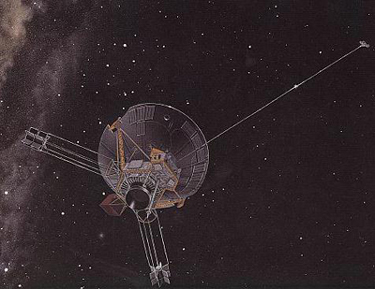
Ruimtevaartuigen beinvloed door onbegrepen versnelling (about the Pioneer Anomaly), Nederlands Tijdschrift voor Natuurkunde, January 2005, pp. 26-29 (journal of the Dutch Physical Society) [ pdf, ~1 MB, in Dutch ].
- The Economist, 19 August, 2004
- De Volkskrant, 2 October 2004, in Dutch
- Newton, October 2004, Italian
- A cover article in the New Scientist of 27 November 2004: Shadow over Gravity (text) [pdf of the article, 1.6 MB]
- Pendel spielen im Dunkeln verrückt (an interview broadcasted by Deutschlandfunk on Feb. 1, 2005, in German).
- A review in the Summer issue of the Journal of Scientific Exploration.
- Gravity's Arc, by David Darling, in Chapter 10 (Wiley, 2006).
In the past 6 months, a short series of articles of mine about gravitation and possible gravitational anomalies was published in the Dutch astronomy magazine Zenit.
Previous Occupations
Research Scientist at Starlab NV/SA in Brussels (until it went bankrupt in June 2001).
See, e.g., Nature: Utopian Dream in Tatters as Starlab crashes to Earth,
or the Starlab Archives (at www.space-time.info)
I was involved in several projects: a photon-echo experiment which looks for quantum coherent states in the brain (in this experiment: the retina), a so-called pre-observation experiment to test whether it is consciousness which does collapse the wave funtion, measurements with a torsion balance, programming in LabVIEW for data-acquisition and analysis. Two consciousness research experiments are being continued at the University of Amsterdam (Prof. Dick Bierman), for which I made some contributions. See, e.g., Pre-Observation Experiment and Photon-echo Experiment , by Bierman (Quantum Models of Consciousness). ![]()
Research scientist (in nuclear and particle physics) at NIKHEF and the University of Utrecht (R.J. van de Graaff Lab) [Measurement of the neutron magnetic form factor (83 citations up to now, according to ISI), 1995 (pdf), 1997 (pdf)].
Development Engineer at a manifacturer of colour measurement devices (Spectrostar BV).
On the left you see two of the Spectrocams we developed (1998-1999).Furthermore, computer programmer (C/C++/Java) and desk-editor at a publisher of scientific journals (Elsevier Science).
My thesis, "Determination of the ground-state nuclear charge density of 208Pb – A study of the influence of dispersive effects in elastic electron scattering" (performed at NIKHEF):
- Contents [pdf].
- Summary and conclusions [pdf].
- Tables with the electron scattering cross sections of the groundstate of 208Pb at 243 MeV and at 429 MeV [pdf].
- Fig. 4.5, the obtained nuclear charge distribution of 208Pb (the rms radius resulting from our analysis was 5.5071(7) fm) [pdf].
- Fig. 4.1, the elastic form factor curve of the 429 MeV data [pdf].
Current Interests in the Physical Sciences and Engineering
Gravitation, Cosmology, Astrophysics, the Pioneer Anomaly, the Flyby anomaly.
Quantum Information, quantum optics. Solid-state research with thermal neutron scattering, especially with SESANS (Spin-Echo Small Angle Neutron Scattering). Statistics, Design of Experiments, Data-analysis. Virtual Instruments (LabVIEW) for data-acquisition and analysis and instrument control. Optics, Sensors, Nanotechnology. RF and Microwave Technology (impedance matching, measurement of EM-fields, oscillators, etc.). Shielding and grounding problems, EMC. Balances (torsion balances, sensitive knife-edge and flexure-strip balances). Biophysics, in particular biological effects of electromagnetic fields. Science policy, innovation
I am performing experimental research into the interaction of some mesoscopic quantum systems with gravity, together with a friend of mine, Kees Water. For this we have build a sensitive torsion balance and the required microwave equipment.
Furthermore, I am performing theoretical work and a literature study on the torsion pendulum work of Erwin Saxl and Mildred Allen, as well as the work of Maurice Allais with so-called paraconical pendulums and the work of R. Latham and J. Last with gyroscopes. Saxl & Allen reported changes in the period of a torsion pendulum during solar eclipses [Phys. Rev. D 3 (1971) p. 823], Allais reported anomalous changes in the plane of swing (the azimuth angle) of a so-called paraconical pendulum during eclipses [e.g., Aero/Space Engineering, Sept., Oct. & Nov. 1959].
There also have been some observations of deviations of gravimeters during eclipses, though others did not observe such an effect, see the Gravitational Anomalies page.
Recently I acquired the original lab journals of Erwin J. Saxl (46 of them, covering the period 1957-1980). I plan to scan most of them and make them available on CD-ROM or DVD, but this will take at least a year (and I am first distilling data from them to use for a couple of articles about the measurements).
Comments by us on an article about the work of Saxl and Allen were published in the Autumn 1996 issue of the Journal of Scientific Exploration ( Vol. 10, nr. 3, pp. 413-414). During the August 1999 total Solar Eclipse in Europe there has been an attempt to check the findings of Allais and Saxl and Allen in a program undertaken by the NASA. The outcome still seems to be ambiguous and has not been published yet [where?]. Some results, though, are described at this NASA page.
And I recently submitted a paper to the ArXiv: A review of conventional explanations of anomalous observations during solar eclipses. (which also contains information about observations of tilt during solar eclipses). A couple of articles, based on my publication, have appeared in some popular scientific journals and a daily newspaper (see above). Some conclusions of mine are rather overstated in some of these articles, however (e.g., I don't see it as a strong challenge to General Relativity Theory yet). At the moment I am prepairing an improved version of the paper in order to submit it to a peer-reviewed journal.More information will be displayed at space-time.info
last updated: 5th of January 2007